Outcomes
Kegels for erectile dysfunction
You can train muscles that help hold an erection. You cannot kegel around arteries, nerves, hormones, or a floor that is already in spasm.
Quick answer
Kegels for erectile dysfunction can help some men whose pelvic floor is weak or poorly coordinated. In Dorey et al., 2004 (randomized trial, n=55), pelvic floor exercises plus manometric biofeedback improved the IIEF erectile function domain versus lifestyle advice alone (+6.74 points at 3 months, P=0.004). At 6 months, 40% attained normal function, 34.5% improved, 25.5% did not. Kegels do not cure ED and do not increase penis size. If the floor is tight or painful, kegels can backfire. New or unexplained ED still needs a clinician, especially with cardiac symptoms.
What you are actually trying to solve
Desired outcome is usable firmness, not a pelvic-floor hobby and not extra length or girth. Decision criteria: Is the floor weak vs tight? Is ED likely vascular, neurologic, hormonal, medication-related, psychogenic, or pelvic-muscle-related? Protocol fit: painless weakness → kegels as in how to do kegels for men; pain/hypertonicity → reverse kegels and PT; red flags → medicine first.
Practice note (Justin): I came in looking for extra size. That search is loud on the internet and unsupported as a kegel outcome. I do not report a size result because I did not measure one, and the trials below did not use circumference as an endpoint. They used IIEF erectile function.
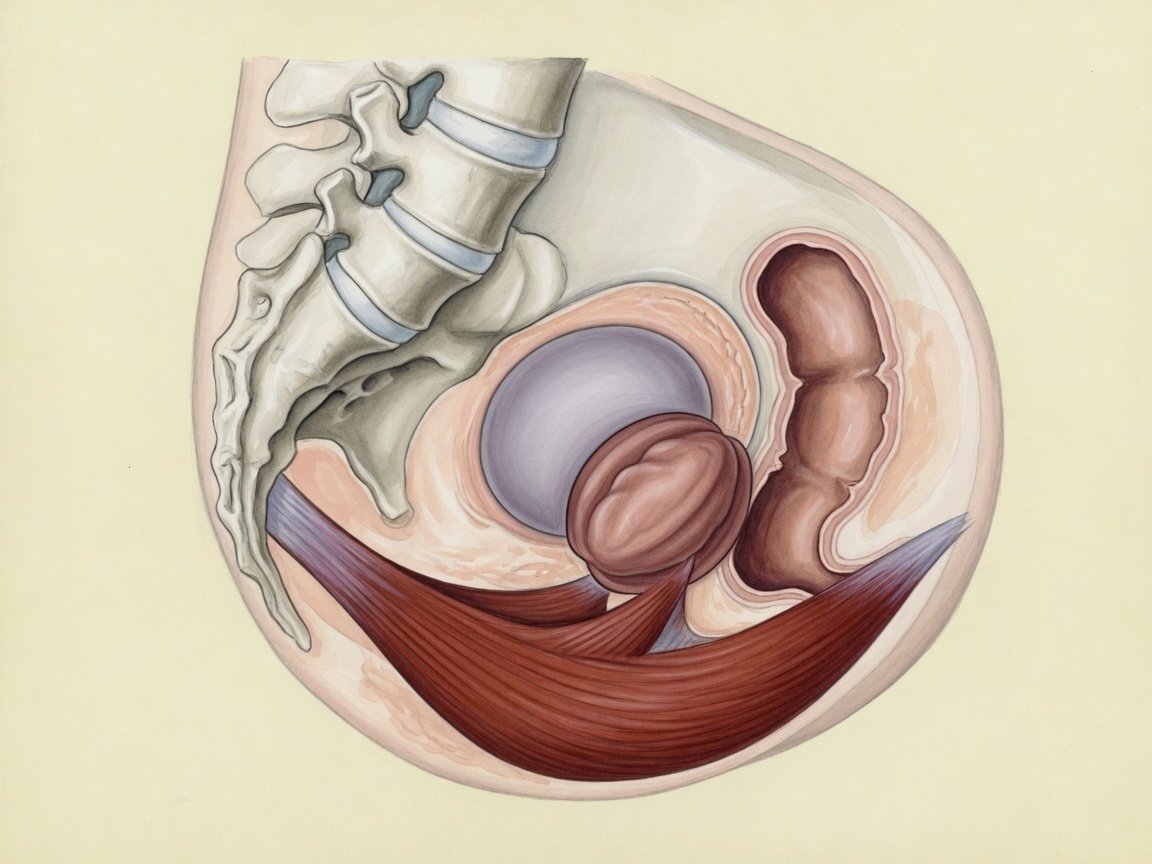
How the muscles can help an erection
Dorey’s introduction states the mechanism in one paragraph: ischiocavernosus and bulbocavernosus (bulbospongiosus) contractions increase intracavernous pressure; bulbocavernosus compresses the deep dorsal vein to limit outflow (PMC1324914).
Lavoisier et al. measured a correlation between ischiocavernosus contraction and intracavernous pressure in men (PMID 3761465; Scholar). That is physiology, not a promise that kegels fix arteriogenic ED.
Colpi et al. compared perineal floor efficiency in potent vs impotent men (PMID 10404284). Useful context; not a treatment trial.
The Dorey 2004 trial, without the marketing
Grace Dorey and colleagues randomized 55 men with ED of at least 6 months from a UK urology clinic. Median age 59.2 (range 22–78). Intervention n=28: pelvic floor exercises, anal manometric biofeedback, lifestyle advice, five weekly 30-minute visits, then home exercises. Control n=27: lifestyle advice only for 3 months, then crossed over. Exclusions: urological congenital abnormalities, neurologic deficits, most prior urological surgery (TURP allowed).
Primary outcome: erectile function domain of the IIEF. An increase of six points was treated as clinically meaningful in the paper’s framing (citing Goldstein et al.’s sildenafil work, PMID 9580646).
| Item | Result |
|---|---|
| Design | RCT, then crossover. Somerset Nuffield Hospital |
| IIEF-EF at 3 months | Intervention better than control by 6.74 points (P=0.004) |
| Anal pressure | +44.16 cmH2O vs control (P<0.001) |
| Blind assessment at 6 months (all men) | 22/55 (40%) normal function; 19/55 (34.5%) improved; 14/55 (25.5%) no improvement |
| Dropouts | 22/55 (40%) did not stay the full duration; some left because they improved |
| Who failed | Paper lists testicular pain, severe low back pain, alcohol addiction, saddle trauma, cardiac disease, diabetes, Peyronie’s, bilateral orchidectomies among non-improvers |
Full text: PMC1324914. PubMed: PMID 15527607. Scholar: Google Scholar.
What Dorey’s men actually did (not “30 random squeezes”)
Clinic: digital anal exam, then manometry with an anal probe; three maximal 10-second lifts with a 10-second rest; computer feedback. Home sheet (Box 1): 3 maximal holds in standing, sitting, and lying, morning and evening; 50% lift while walking; post-void squeeze-out; optional rhythmic tightening during sex. Details on the how-to page.
If you only copy the internet version and skip isolation, rest, and the let-go, you are not doing Dorey’s intervention.
Other evidence, ranked honestly
- Claes and Baert, 1993: pelvic floor exercise vs surgery for impotence, smaller uncontrolled/early work (PMID 8435738).
- Myers and Smith, 2019: systematic review — PFMT appears effective for ED and PE; no optimal protocol identified. Journal: Physiotherapy. publisher page. Google Scholar.
- Post-prostatectomy ED: mixed, limited high-quality data. Kannan et al. meta-analysis: PFMT plus biofeedback may help erectile function at 12 months; PFMT alone inconclusive (PMC9178777).
Cleveland Clinic lists greater ejaculatory control as a possible sexual benefit of kegels for men and does not claim an ED cure. Cleveland Clinic.
When kegels are a reasonable ED experiment
Low pelvic pain, some leakage or after-dribble suggesting a weak floor, ability to find a lift, and a clinician who has ruled out urgent medical causes. Then use a sourced dose for 3 months, which is how long Dorey said men should practise to obtain a benefit.
When kegels are the wrong next step for ED
Pelvic pain, “prostatitis” without infection, kegels already worsening erections, a floor that cannot let go. Dorey also noted severe arteriogenic and neurologic ED may not benefit, and that excluding diabetes, Peyronie’s, heavy cardiac disease, and similar problems might have made their results look more impressive. Those men need urology, not more volume.
Best for
- Painless ED with signs of pelvic floor weakness
- Men already in medical care who want an adjunct
Avoid if
- Chest pain, sudden neurologic ED, or unassessed cardiac risk
- Painful, tight floor
- Anyone promising a cure rate or a size increase
FAQs
Do kegels cure erectile dysfunction?
No. In Dorey et al. 2004 (n=55), 40% attained normal erectile function at 6 months, 34.5% improved, 25.5% did not. Training included biofeedback, five supervised visits, and lifestyle advice — not unsupervised kegels alone.
How do pelvic floor muscles affect erections?
Ischiocavernosus contractions raise intracavernous pressure. Bulbospongiosus compresses the deep dorsal vein and helps hold blood in. That assists rigidity when arterial inflow is already adequate. It cannot replace blood flow, nerves, hormones, or medication review.
Can kegels make ED worse?
Yes, if the floor is hypertonic. Extra squeezing can add pain and tension. Screen tight vs weak first.
How long should I try kegels for ED?
Dorey measured 3 and 6 months. Cleveland Clinic notes many people notice pelvic-floor changes in 6–8 weeks. If pain appears, stop. If nothing changes after 8–12 weeks of correct practice, see a clinician rather than doubling volume.
Should I stop ED medication to try kegels?
No. Do not stop a prescribed PDE5 inhibitor without the prescriber. Dorey framed pelvic floor training as a first-line or adjunct option, not as a replacement this site can authorize.
Is post-prostatectomy ED the same as Dorey’s sample?
No. Dorey excluded most prior urological surgery (TURP was allowed). Nerve-sparing status dominates post-prostatectomy recovery. See kegels after prostate surgery.
What to do next
If kegels are appropriate, use the 4-week starter protocol. If you have pain or squeezing already made things worse, start with tight vs weak instead.
Sources
- Dorey G et al. RCT of pelvic floor muscle exercises and manometric biofeedback for erectile dysfunction. Br J Gen Pract. 2004;54(508):819-825. PMID 15527607. PMC1324914. Google Scholar
- Lavoisier P, Courtois F, Barres D, Blanchard M. Correlation between intracavernous pressure and contraction of the ischiocavernosus muscle in man. J Urol. 1986;136(4):936-939. PMID 3761465
- Colpi GM, Negri L, Nappi RE, Chinea B. Perineal floor efficiency in sexually potent and impotent men. Int J Impot Res. 1999;11(3):153-157. PMID 10404284
- Claes H, Baert L. Pelvic floor exercise versus surgery in the treatment of impotence. Br J Urol. 1993;71(1):52-57. PMID 8435738
- Myers C, Smith M. Pelvic floor muscle training improves erectile dysfunction and premature ejaculation: a systematic review. Physiotherapy. 2019. DOI landing. Google Scholar
- Kannan P et al. Effectiveness of physiotherapy interventions for improving erectile function and climacturia in men after prostatectomy. PMC9178777
- Goldstein I et al. Oral sildenafil in the treatment of erectile dysfunction. N Engl J Med. 1998;338:1397-1404. PMID 9580646
- Cleveland Clinic. Kegel exercises for men. 2025. clevelandclinic.org
- NIH Consensus Development Panel on Impotence. Impotence. JAMA. 1993;270:83-90. (definition used by Dorey)