Male pelvic floor training
Kegels for men
Most advice says squeeze more. That helps some men. It harms others. This page is the decision layer: find the muscles, tell tight from weak, pick a protocol, and know when to stop.
Quick answer
Kegels for men are pelvic floor muscle contractions. They can help a weak or poorly coordinated floor with leakage, after-dribble, some erectile difficulties, and ejaculatory control. They are the wrong next step when the floor is already too tight (hypertonic). Find the muscles, decide tight vs weak, then train or downtrain. Do not kegel while you urinate. Do not kegel with a catheter in. Do not use kegels as a penis-enlargement method. Results, when they happen, usually take weeks, not days. This is education, not a cure.
Who this guide is for
This hub is for men searching kegels for men because they want more control — of urine, erections, ejaculation, or recovery after prostate treatment — and they do not want bro-science or a product pitch.
Read this page first if you still need to decide whether kegels are appropriate. Then go to the matching spoke:
- Strengthening is appropriate → how to do kegels for men and the 4-week protocol
- Pain, urgency without leak, or kegels already worse → tight vs weak and reverse kegels
- A specific outcome → ED, last longer, after prostate surgery, or after-dribble
Practice note (Justin): I found kegels because I wanted extra size. That is a common search path and a bad primary goal. Nothing on this site treats kegels as enlargement. What the muscles can change is lift, let-go, and sometimes rigidity or control.
What problem are kegels for men supposed to solve?
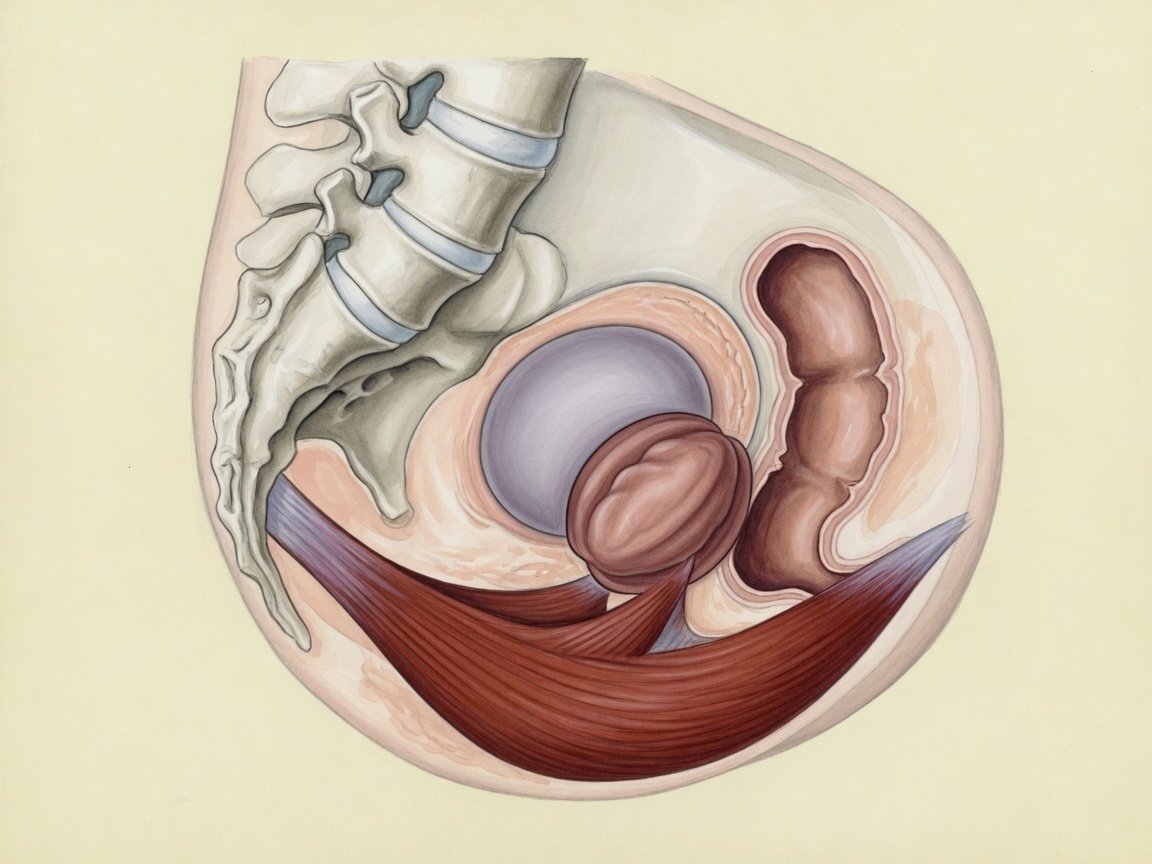
The pelvic floor is a sling of muscle from the pubic bone to the tailbone. In men it supports the bladder and bowel, wraps the urethra, and includes muscles that help stiffen the penis and modulate ejaculation.
Cleveland Clinic: these muscles help control urinary and bowel function and help control blood flow to the penis, erection, and ejaculation. Cleveland Clinic kegels for men.
When those muscles are weak, poorly timed, or uncoordinated, men commonly notice:
- A few drops of urine after leaving the toilet (post-void dribble)
- Leakage with a cough, lift, or urge, especially after prostate surgery
- Erections that are slow to firm or hard to keep
- Ejaculation that arrives before they want it
When those muscles are too tight, the same search — “kegels for men” — often leads to the wrong prescription. Tight floors more often show pelvic or perineal pain, a hesitant stream, incomplete emptying, pain with ejaculation, and symptoms that flare after squeezing. Cleveland Clinic describes hypertonic pelvic floor as muscles in spasm or constant contraction that cannot relax and coordinate, with possible ED or pain with erection or ejaculation. Hypertonic pelvic floor.
That is why this hub starts with assessment, not volume.
What muscles are you actually training?
Two layers matter for kegels for men:
- Pelvic diaphragm (levator ani) — puborectalis, pubococcygeus, iliococcygeus. This is the sling under bladder, prostate, and rectum. A kegel lifts it. A reverse kegel lets it drop.
- Superficial perineal muscles — ischiocavernosus (along the penile crura; rigidity) and bulbospongiosus (around the urethral bulb; ejaculation and venous assist). Dorey’s ED trial treated these as the rigidity muscles. Lavoisier et al. measured a correlation between ischiocavernosus contraction and intracavernous pressure. PMID 3761465.
A correct kegel is a small coordinated lift of this group. Buttocks, abs, and inner thighs are cheats. Dorey confirmed a correct contraction by a scrotal lift and penile retraction. PMC1324914.
Is a weak floor or a tight floor more likely?
A weak (hypotonic) floor cannot generate enough lift or hold. A tight (hypertonic) floor cannot fully let go. Some men have both: short, guarded, and still weak through range — like an arm that just came out of a cast. Faubion, Shuster, and Bharucha call the let-go problem nonrelaxing pelvic floor dysfunction. PMID 22305030.
| Clue | More consistent with weak | More consistent with tight |
|---|---|---|
| Urine | Leak with cough, lift, or after prostate surgery; after-dribble | Hesitant start, urgency without much leak, incomplete emptying |
| Pain | Usually little pelvic pain | Perineal, testicular, or tailbone pain; “prostatitis” without infection |
| Sex | Soft erection, poor ejaculatory hold from low endurance | Premature ejaculation with tension, pain after orgasm, reduced sensation |
| Response to kegels | Gradual improvement over weeks | Worse pain, urgency, or erection quality |
| First protocol | Kegels | Reverse kegels and downtraining |
Cleveland Clinic urology teaching: more than half of men with CP/CPPS in a multicenter NIH-sponsored study had pelvic floor spasm on exam; kegels applied as generic PT can make that worse. The treatment is relaxation-focused PT, not more squeezing. ConsultQD — pelvic floor spasm.
Self-screening is imperfect. A pelvic floor physical therapist can test contraction and relaxation directly. If clues conflict, do not stack more kegels. Full fork: tight vs weak.
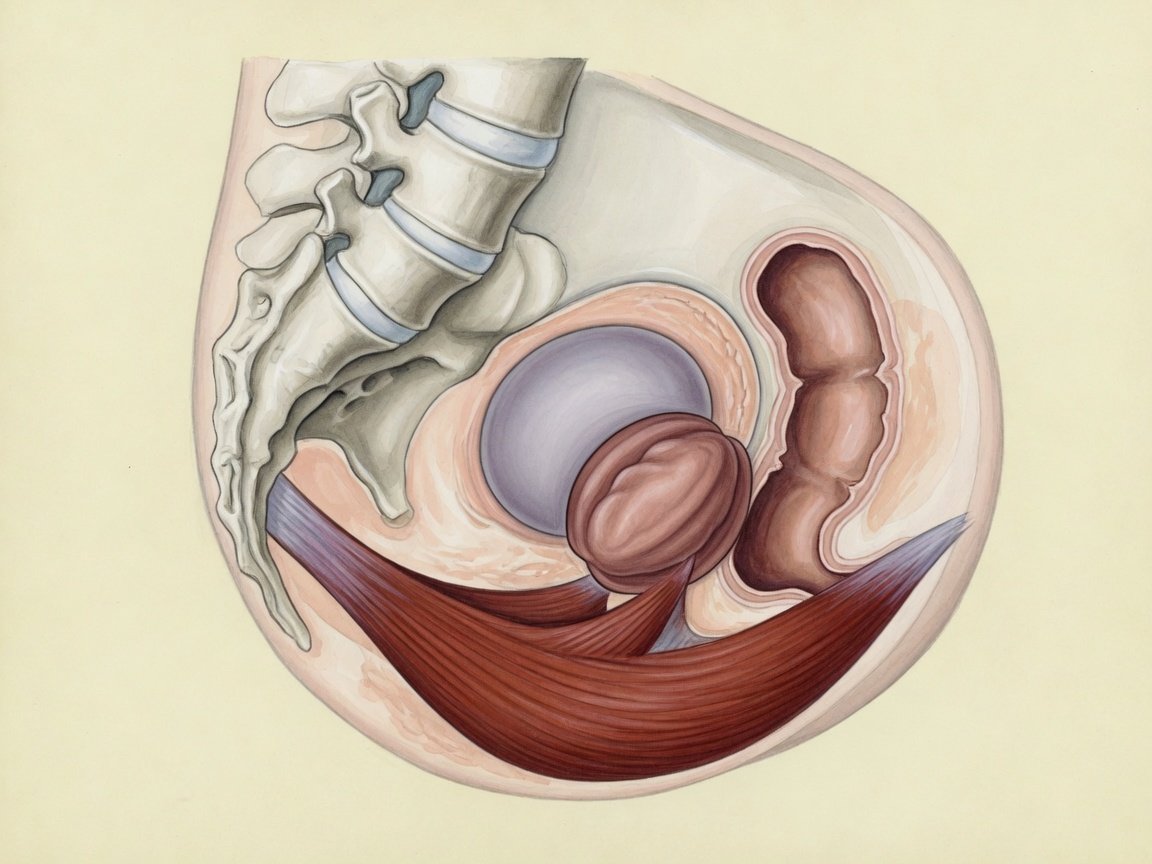
Kegel. The sling shortens and lifts.
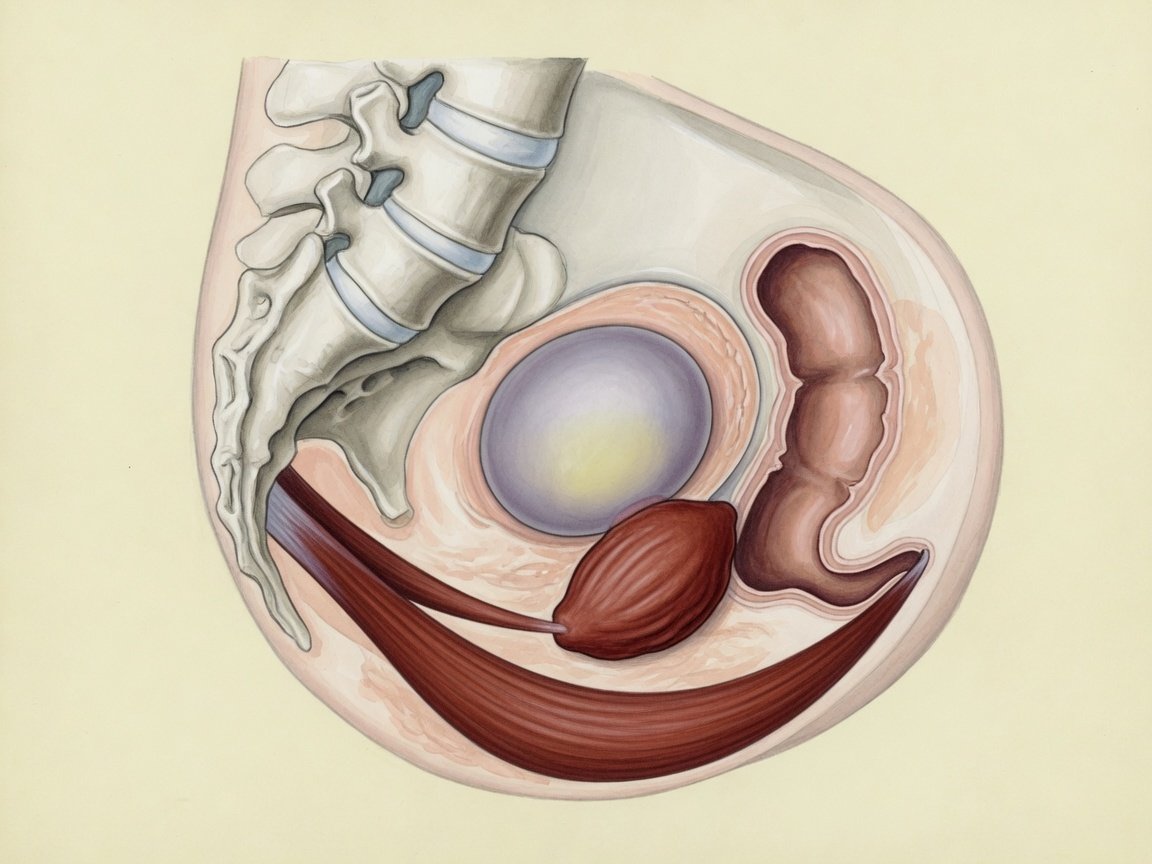
Reverse kegel. The sling lengthens and drops.
How do you find the muscles?
You have the right muscles if you can gently stop urine midstream once, or if you can tighten as if holding in gas, and you feel a lift at the base of the penis and anus — not a clench of the buttocks, abs, or thighs.
Cleveland Clinic: stop urine or gas, or draw the scrotum up. Continence Health Australia adds a mirror check: the penis may pull in slightly and the testicles may lift. Relaxation should feel like a clear let-go.
Use the urine-stop test only to identify the muscles. Mayo Clinic: don’t do kegels while you urinate. NIDDK also requires a full relax between squeezes and warns that overdoing can lead to straining when you urinate or move your bowels. Mayo Clinic. NIDDK.
Full identification steps: how to find pelvic floor muscles.
How to do a kegel (if strengthening is appropriate)
Empty the bladder. Lie or sit. Breathe. On a light exhale, lift as if stopping gas and urine together. Count out loud so you do not hold your breath (Cleveland Clinic). Hold 3–5 seconds as a beginner; build toward 10. Let go completely for at least as long as you held. If there is no drop, stop adding reps.
Wrong: pelvis tucking, glutes gripping, belly bracing, jaw clenched, urine-stop as the workout.
Right: small lift at anus and penile base; optional scrotal lift / slight penile in-draw; a real let-go; you can speak the count.
Step-by-step, form checklist, and troubleshooting: how to do kegels for men.
What dose should you follow?
Medical centers do not use one identical dose. They cluster around isolated squeeze, equal rest, three sessions a day, longer holds over time. Myers and Smith’s 2019 systematic review found pelvic floor training appeared effective for ED and PE but could not name an optimal protocol. PMID 30979506.
| Source | Hold / rest | Volume | Notes |
|---|---|---|---|
| Mayo Clinic | 3 s, then longer; rest 3 s | 10–15 reps × 3 sets/day | Lying, sitting, standing. Don’t kegel while urinating. |
| Cleveland Clinic | 5 s → 10 s; equal rest | 10 reps × 3 sessions/day (~30/day) | Count out loud. Overdoing can increase tension. No catheter. |
| MSK | 5 s / 5 s | 10 reps, ≥3×/day | Empty bladder first. No Foley. |
| NIDDK | 3 s hold, full relax, build to 10 s | At least 3 times/day | Three positions. Full relax is required. |
| Dorey 2004 home sheet | Maximal isolated hold | 3 max × 3 positions × 2/day = 18 max holds | Plus 50% lift while walking and a post-void squeeze. Clinic also used biofeedback. |
This site’s 4-week starter protocol starts easier than Cleveland Clinic’s full dose, then builds to it. Beginners who jump to 10-second max holds usually recruit glutes.
Weekly volume at the Cleveland Clinic dose: about 210 quality contractions, plus full relaxes. More is not more advanced. Cleveland Clinic: overdoing kegels can increase muscle tension or worsen symptoms.
If the floor is tight: reverse kegels first
A reverse kegel is a controlled lengthening — a let-go and drop — usually on a diaphragmatic inhale. It is not bearing down as if passing stool.
Lie down, knees bent, unbrace. Inhale so the belly rises and allow the pelvic floor to drop like a hammock. Exhale without clenching. 8–10 breaths is a session. Two or three sessions a day. Stop if you strain or pain rises.
Named reverse-kegel RCTs in men are scarce. The logic is downtraining for hypertonicity, not a secret stamina trick. Full drill: reverse kegels for men.
Which outcomes can this training help?
Kegels for men are not a single-outcome trick. The same muscles show up in several problems. Evidence quality differs by outcome. None of these is a guaranteed cure.
| Outcome | What evidence shows | Honest limit |
|---|---|---|
| After-dribble | Mayo Clinic lists dribble after urination as a reason men might benefit. NHS leaflets teach a post-void squeeze and urethral milking. Dorey’s ED trial reported after-dribble improved in treated men. | Small evidence base. Not every dribble is a weak floor. |
| After prostate surgery | PFMT is a first-line conservative treatment for post-prostatectomy leakage. It can speed return of continence for some men; differences often shrink by 12 months. Never with a Foley in (MSK, Cleveland Clinic). | Does not replace surgical options for severe, persistent incontinence. Post-RP ED evidence is mixed (Kannan et al., PMC9178777). |
| Erectile function | Dorey et al., 2004 (BJGP RCT, n=55): exercises plus biofeedback vs lifestyle advice; +6.74 IIEF-EF points at 3 months (P=0.004). At 6 months, 40% attained normal function, 34.5% improved, 25.5% did not. PMID 15527607. | Small trial, 40% dropout, clinic biofeedback. Not a PDE5 replacement. Tight floors can worsen with kegels. Not a size protocol. |
| Ejaculatory control | Pastore et al., 2014: 40 men with lifelong PE; 12 weeks of clinic rehab (physio, electrostimulation, biofeedback, 3×60 min/week); 33/40 (82.5%) gained control; mean IELT 146.2 s. PMID 24883105. | Small, uncontrolled. Clinic rehab, not 30 home kegels. Tight floors may need release first. |
Myers and Smith (2019) reviewed PFMT for ED and PE in non-surgical men: apparent benefit, no optimal protocol. PMID 30979506.
When do kegels for men backfire?
Kegels backfire when you add load to a floor that cannot relax, when you train the wrong muscles, or when you never rest.
Stop kegels and switch to assessment if you notice:
- Pelvic, penile, or perineal pain during or after sets
- More urinary urgency or a weaker, more hesitant stream
- Worse erections or more pelvic tension with arousal
- A floor that never feels like it lets go between reps
- Head, belly, or low-back strain from breath-holding
Cleveland Clinic: you should not feel pain while doing kegels; if you do, technique may be wrong or kegels may not be appropriate now. Overdoing can increase tension. That pattern is covered in kegel mistakes and treated first with reverse kegels.
Hard stops. Do not start a home kegel plan if you have a Foley catheter in, blood in the urine, cannot pass urine, fever with pelvic pain, sudden scrotal swelling, new weakness or numbness in the legs or saddle area, or chest pain with erection problems. Those need medical care.
Should you start at home or see a clinician first?
Reasonable to start a conservative home plan if: you can find a painless lift, your main issue is after-dribble or mild leakage, and you have no red flags. NIDDK still says check with a health professional before you begin.
See a pelvic floor PT or physician first if: pain, failed kegels, post-prostatectomy complexity, you cannot find the muscles, suspected infection or obstruction, or ED that is new, sudden, or paired with cardiac symptoms.
A pelvic PT exam is the actual tight-vs-weak test. This hub is a filter, not that exam.
A 4-week path that does not require buying anything
- Week 0: screen tight vs weak. Find the muscles once. Red flags → clinician.
- If tight: reverse kegels only (8–10 breaths, 2–3×/day). No max kegels.
- If weak: 3-second holds, 5–8 reps, 3×/day, lying or sitting. Full rest.
- Weeks 2–4: progress holds toward 5–10 seconds and add standing only if form stays isolated. Print the 4-week protocol.
That calendar is a synthesis of Mayo, Cleveland Clinic, MSK, NIDDK, and Dorey’s home sheet. It is not a trial of this exact schedule.
Best for
- Men with leakage, after-dribble, or post-prostatectomy weakness and little pelvic pain
- Men who can find a lift at the base of the penis without bracing abs or glutes
- Men who want a non-drug, non-device first experiment while they also see appropriate medical care
Avoid if
- Pelvic pain, suspected hypertonic floor, or kegels already made symptoms worse — start with reverse kegels / PT
- Catheter in place or surgeon has not cleared training after prostate surgery
- You want a guaranteed erection, stamina, size, or continence cure
- Red-flag urinary, neurologic, or systemic symptoms
FAQs
Do kegels for men actually work?
They can, when the pelvic floor is weak or poorly coordinated and the contractions are done correctly. Trials have shown improvement in some men with erectile dysfunction, premature ejaculation, post-void dribble, and incontinence after prostate surgery. They are not a cure, and they can worsen symptoms if the floor is already too tight.
How many kegels should a man do a day?
A common medical-center target is 10 contractions, three times per day (about 30 total), after you can hold 5–10 seconds with a full relax between reps. Cleveland Clinic uses this dose. Dorey’s 2004 home sheet used 18 maximal holds a day in three positions. Stop if you feel pain, strain, or rising pelvic tension.
How long until kegels for men show results?
Cleveland Clinic notes that many people notice changes after six to eight weeks of consistent practice. Sexual-function trials often measure outcomes at 12 weeks to 6 months. There is no guaranteed timeline.
Can kegels make erectile dysfunction worse?
Yes, if the pelvic floor is hypertonic (too tight). Extra squeezing can add tension and worsen pain or erection quality. Men with pelvic pain, a hesitant stream, or symptoms that worsen after kegels should start with reverse kegels and a pelvic PT, not more contractions.
Should I stop my urine stream to do kegels?
No. Using a midstream stop once or twice can help you find the muscles. Doing it as a daily exercise can disrupt bladder emptying and raise infection risk. Mayo Clinic advises not to kegel while urinating.
Are kegels for men the same as reverse kegels?
No. A kegel is a squeeze and lift of the pelvic floor. A reverse kegel is a controlled let-go and lengthening, usually on a diaphragmatic inhale. Weak floors usually need kegels. Tight floors usually need reverse kegels first.
Can kegels increase penis size?
No published kegel trial in men used penis size as an endpoint. Dorey used the IIEF erectile function domain. Kegels can assist rigidity in some men. They are not an enlargement method.
What muscles do kegels for men train?
The pelvic floor sling (levator ani, including puborectalis) plus superficial perineal muscles, especially ischiocavernosus and bulbospongiosus. Those last two help penile rigidity and ejaculation. A correct kegel is a small lift of this group, not a glute clench.
What to do next
If kegels are appropriate, use the 4-week starter protocol. If you have pain or squeezing already made things worse, start with tight vs weak instead.
Sources
- Mayo Clinic. Kegel exercises for men: Understand the benefits. mayoclinic.org
- Cleveland Clinic. Kegel exercises for men. Updated 28 Jan 2025. clevelandclinic.org
- Cleveland Clinic. Hypertonic pelvic floor. clevelandclinic.org
- Cleveland Clinic ConsultQD. How to diagnose and manage pelvic floor spasm. consultqd.clevelandclinic.org
- NIDDK. Kegel exercises. niddk.nih.gov
- Memorial Sloan Kettering Cancer Center. Pelvic floor muscle (Kegel) exercises for males. mskcc.org
- Dorey G et al. Randomised controlled trial of pelvic floor muscle exercises and manometric biofeedback for erectile dysfunction. Br J Gen Pract. 2004;54(508):819-825. PMID 15527607. PMC1324914. Google Scholar
- Pastore AL et al. Pelvic floor muscle rehabilitation for patients with lifelong premature ejaculation. Ther Adv Urol. 2014;6(3):83-88. PMID 24883105. PMC4003840. Google Scholar
- Myers C, Smith M. Pelvic floor muscle training improves erectile dysfunction and premature ejaculation: a systematic review. Physiotherapy. 2019. PMID 30979506. Google Scholar
- Faubion SS, Shuster LT, Bharucha AE. Recognition and management of nonrelaxing pelvic floor dysfunction. Mayo Clin Proc. 2012;87(2):187-193. PMID 22305030
- Lavoisier P et al. Correlation between intracavernous pressure and contraction of the ischiocavernosus muscle in man. J Urol. 1986. PMID 3761465
- Kannan P et al. Physiotherapy interventions for erectile function and climacturia after prostatectomy. PMC9178777
- Continence Health Australia. Pelvic floor exercises for men. continence.org.au