Assessment
Tight vs weak pelvic floor in men
The first training decision is not “how many kegels.” It is “should I kegel at all?” A tight floor and a weak floor can feel similar from the inside and need opposite first steps.
Quick answer
A weak (hypotonic) pelvic floor cannot lift or hold well. A tight (hypertonic) pelvic floor cannot fully relax. Both can disturb urine, erections, and ejaculation. Kegels are a reasonable next step for many weak, low-pain floors — after-dribble, cough-leak, post-prostatectomy once the catheter is out. Kegels are the wrong next step when there is pelvic pain, a hesitant stream, or symptoms that worsen with squeezing. Cleveland Clinic describes hypertonic pelvic floor as muscles in spasm or constant contraction. Those men start with reverse kegels, diaphragmatic breathing, and usually pelvic floor PT — not more squeezing.
Why this distinction exists
Most “kegels for men” pages are written for incontinence. That is a real use. It is not the only male pelvic-floor problem. Cleveland Clinic’s hypertonic pelvic floor page lists pain, urinary and bowel trouble, erectile dysfunction, and pain with erection or ejaculation as possible features of a floor that will not relax. Cleveland Clinic — hypertonic pelvic floor.
Faubion, Shuster, and Bharucha (Mayo Clinic Proceedings, 2012) reviewed nonrelaxing pelvic floor dysfunction: the muscle does not let go when it should. That is a coordination/relaxation disorder. Strengthening first is the wrong tool. PMID 22305030. Google Scholar.
Cleveland Clinic urology teaching on pelvic floor spasm in men: pain can be felt in the penis, testicles, perineum (“sitting on a golf ball”), lower abdomen, and low back; men may have post-ejaculatory pain and ED. More than half of men with CP/CPPS in a multicenter NIH-sponsored study had pelvic floor spasm on exam. The mainstay of treatment is PT aimed at relaxing the muscles, not strengthening them. “Kegel exercises, which are often inappropriately applied as generic physical therapy, can make the symptoms worse.” Cleveland Clinic ConsultQD — pelvic floor spasm.
Practice note (Justin): I started kegels because I wanted extra size. If your only cue is squeeze-harder, you will never notice a floor that cannot drop. The useful question is whether a gentle lift is followed by a real let-go.
What is a weak (hypotonic) pelvic floor?
The muscles cannot generate enough force or endurance, or they fire too late. Common context: aging, disuse, and especially after radical prostatectomy when the internal sphincter is gone and the remaining floor has to do more. Leakage with cough or lift, after-dribble, and easy fatigue on a 5-second hold fit this pattern better. That is the population Mayo Clinic and MSK are usually writing for when they teach kegels for men.
See how to do kegels for men and kegels after prostate surgery.
What is a tight (hypertonic) pelvic floor?
Cleveland Clinic: the muscles are in spasm or constant contraction, temporarily or constantly, and cannot relax and coordinate. Pain is common — pelvis, low back, hips. Sexual symptoms can include ED or pain with erection or ejaculation. Symptoms often build slowly. Cleveland Clinic.
In men this pattern is frequently mixed up with chronic prostatitis that is not an infection (CP/CPPS). UPMC pelvic PT teaching: the most common “prostatitis” type is muscle-related; antibiotics will not fix a floor that is too tight. After prostate removal, weakness is the usual story. In CP/CPPS, tightness often is. UPMC — when men need pelvic floor PT.
| Question | Weak / underactive | Tight / overactive (hypertonic) |
|---|---|---|
| Better overall starting move | Kegels with full rest | Reverse kegels, diaphragm breathing, PT downtraining |
| Better for beginners with leakage, little pain | Yes | Usually no |
| Better after prostate surgery (catheter out) | Usually yes, per surgical guidance | Only if a clinician finds excess tone |
| Urine pattern (typical) | Leak with cough/lift; after-dribble | Hesitant start, urgency, incomplete emptying |
| Pain | Usually little pelvic pain | Perineum, penis, testicles, tailbone; “golf ball” sitting |
| Response to kegels | Gradual improvement over weeks | Worse pain, urgency, or erection quality |
| Biggest difference | Need force and endurance | Need length and let-go |
| Trade-off | Overdoing kegels can create a tight floor later (NIDDK / Cleveland Clinic) | Skipping strength forever can leave a long, uncoordinated floor |
| Choose neither | Blood in urine, retention, fever, catheter in, neurologic red flags — clinician, not this page | |
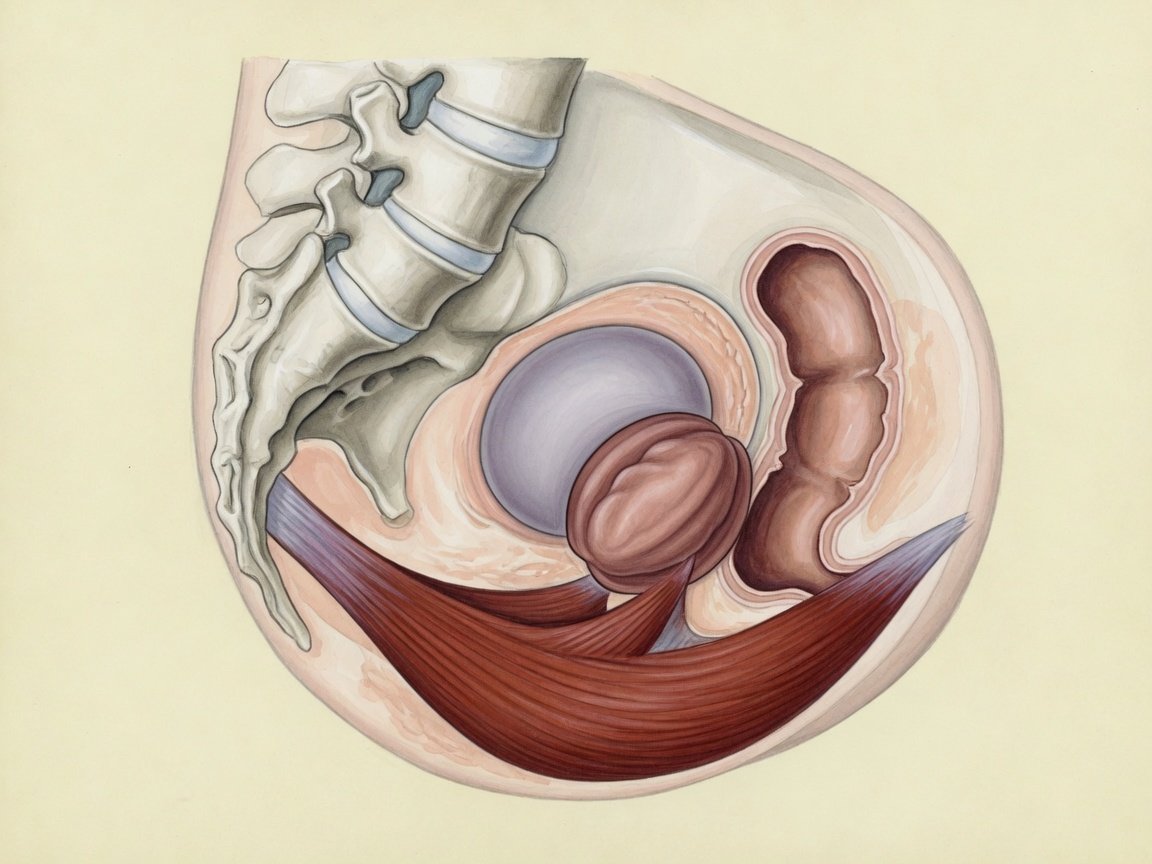
Kegel — lift. Better first if the floor is weak.
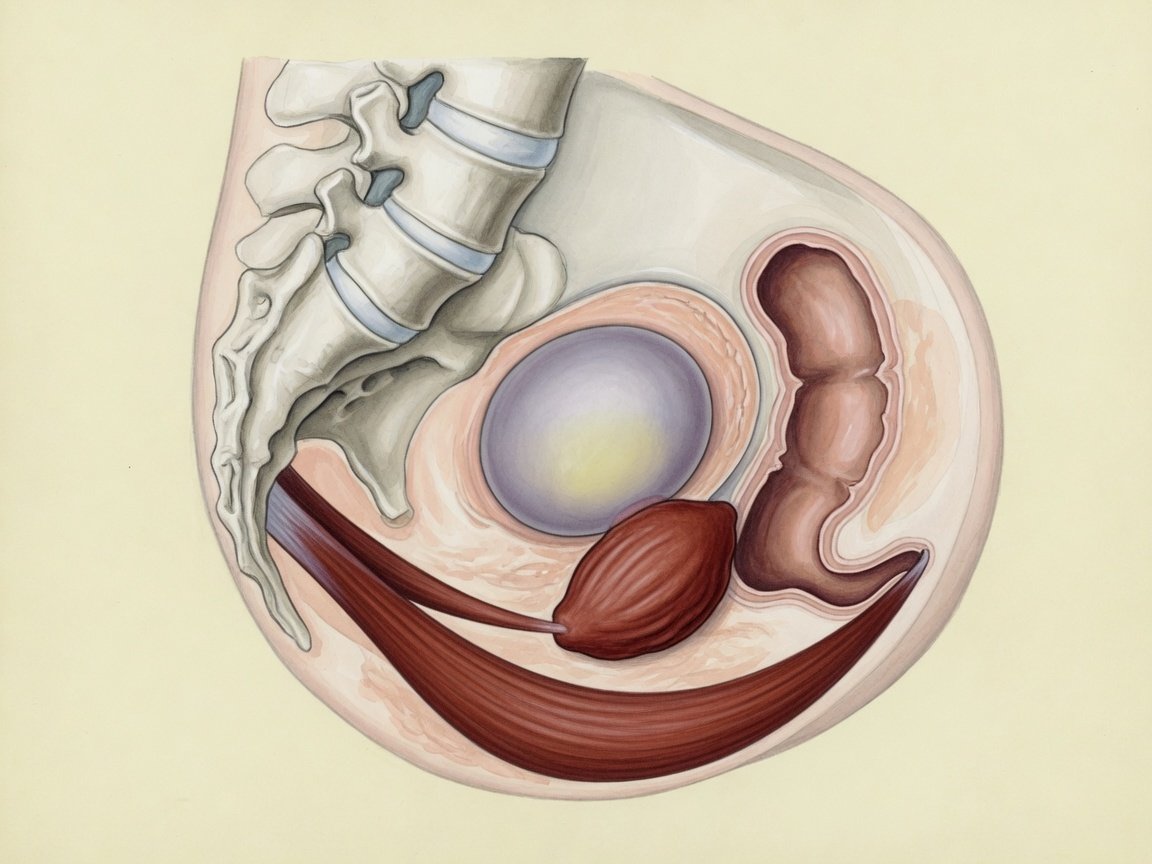
Reverse kegel — drop. Better first if the floor is tight.
A 60-second self-screen
- Do you have pelvic, perineal, testicular, or ejaculatory pain? If yes, treat as tight-first until a clinician says otherwise.
- Did kegels already make you worse? If yes, stop kegels. Go to reverse kegels.
- Is your main issue leakage or after-dribble without pain, especially after prostate treatment? Strengthening is more reasonable.
- Can you feel a full let-go after a gentle squeeze? If no, you do not have relaxation yet. Do not pile holds. NIDDK’s kegel method requires a full relax between squeezes. NIDDK.
Evidence status: this screen is an editorial synthesis of the clinic pages and papers above. It is not a validated questionnaire. We have not tested it in a cohort. A pelvic PT exam is the actual test.
What “overdoing kegels” does
Cleveland Clinic, kegels for men: doing too many can increase muscle tension or make symptoms worse; pain means stop. Cleveland Clinic kegels for men.
NIDDK: fully relax between repetitions; overdoing can lead to straining when you urinate or move your bowels; do not tighten stomach, thighs, or other muscles at the same time. NIDDK kegel exercises.
That is how a weak-floor program becomes a tight-floor problem: max effort, no rest, glute substitution, hundreds of reps. See kegel mistakes.
What treatment looks like when the floor is tight
Cleveland Clinic lists biofeedback, relaxation of pelvis and abdominal wall, and referral to a therapist trained in pelvic floor dysfunction — not a kegel contest. ConsultQD: PT consists of myofascial release, posture, and stretching; the goal is to relax, not strengthen; PT improves symptoms in about 80% of pelvic-floor-spasm cases in the literature they cite, with the usual limits of those studies.
A 2022 systematic review in Sexual Medicine Reviews found pelvic floor PT appears efficacious in chronic prostatitis / CP/CPPS (and several pain conditions), using relaxation-oriented PT rather than isolated strengthening. van Reijn-Baggen et al., 2022. Google Scholar.
Consensus guidelines on high-tone pelvic floor dysfunction (mostly gynecologic cohorts, same mechanical logic): PFPT first-line for 8–12 weeks, aimed at relaxation, not strengthening. PMC10953682.
Home drills that match that logic: reverse kegels and belly breathing. They do not replace PT when pain is the main story.
What options exist besides “more kegels”?
- Kegels — strengthening and timing, if the floor is weak
- Reverse kegels — length and let-go
- Diaphragmatic breathing (the inhale is the mechanical lengthener)
- Pelvic floor physical therapy, often with biofeedback and myofascial work
- Urologic care for infection, obstruction, medication, hormones, and surgery-related issues
Best for
- Men stuck between “squeeze more” articles and pain forums
- Anyone about to start a high-rep kegel challenge
- Men with “prostatitis” that did not respond to antibiotics
Avoid if
- You use this page to delay care for blood in urine, retention, or fever
- You want a quiz that replaces a PT exam
FAQs
Can a pelvic floor be tight and weak at the same time?
Yes. A muscle can be short, guarded, and still poor at producing useful force through range. Faubion et al. describe nonrelaxing pelvic floor dysfunction as a coordination and relaxation problem, not a simple “weak vs strong” binary. Length and let-go usually come before heavy strengthening.
If I leak urine, is my pelvic floor definitely weak?
No. Leakage can come from weakness, poor timing, or urgency driven by an overactive floor. After prostatectomy, leakage is more often a weakness/coordination problem. Painful urgency with a hesitant stream is more often tightness until proven otherwise.
How do I know kegels are the wrong move?
Symptoms worsen within sessions or over days: more pain, more urgency, a more hesitant stream, or worse erections. Cleveland Clinic states that overdoing kegels can increase tension or worsen symptoms, and that kegels should not hurt.
Should I see a pelvic floor PT or just self-screen?
Self-screening is a starting filter. The actual test is a pelvic floor PT exam (and often urology to rule out infection or obstruction). Seek PT sooner if you have pain, failed kegels, post-surgical complexity, or you cannot find the muscles.
Do reverse kegels replace kegels forever?
Not necessarily. Many tight floors need downtraining first, then coordinated strengthening. Starting with kegels on a hypertonic floor is the common error.
Is “hypertonic pelvic floor” a diagnosis I can give myself?
No. It is a clinical pattern. Cleveland Clinic describes it as pelvic floor muscles in spasm or constant contraction that cannot relax and coordinate. This page is a decision aid, not a diagnosis.
Is chronic prostatitis the same as a tight pelvic floor?
Often they overlap, they are not identical. Many men labeled chronic prostatitis / chronic pelvic pain syndrome (CP/CPPS) have pelvic floor spasm on exam without active infection. Antibiotics will not treat a muscle that will not let go.
What to do next
If kegels are appropriate, use the 4-week starter protocol. If you have pain or squeezing already made things worse, start with tight vs weak instead.
Sources
- Cleveland Clinic. Hypertonic pelvic floor. clevelandclinic.org
- Cleveland Clinic. Kegel exercises for men. 2025. clevelandclinic.org
- Cleveland Clinic ConsultQD. How to diagnose and manage pelvic floor spasm. consultqd.clevelandclinic.org
- Faubion SS, Shuster LT, Bharucha AE. Recognition and management of nonrelaxing pelvic floor dysfunction. Mayo Clin Proc. 2012;87(2):187-193. PMID 22305030. Google Scholar
- NIDDK. Kegel exercises. niddk.nih.gov
- van Reijn-Baggen DA et al. Pelvic floor physical therapy for pelvic floor hypertonicity: a systematic review of treatment efficacy. Sex Med Rev. 2022. journal page. Google Scholar
- High-tone pelvic floor dysfunction treatment algorithm. PMC10953682
- UPMC HealthBeat. When men need pelvic floor physical therapy. share.upmc.com
- Mayo Clinic. Kegel exercises for men. mayoclinic.org