Technique
Reverse kegels for men
If squeezing made you worse, you do not need a tougher kegel. You need a reliable let-go. That is a reverse kegel — length, not load.
Quick answer
Reverse kegels for men are a gentle lengthening of the pelvic floor, usually on a belly inhale, used when the floor is too tight to relax. They are the first-line home drill for many men with pelvic pain, urgency without leakage, or kegels that backfired. They are not a push, not a strain, and not the right first tool for a clearly weak, painless floor after prostate surgery. Named reverse-kegel RCTs in men are scarce. The clinical logic is downtraining for hypertonicity: Cleveland Clinic treats pelvic floor spasm with relaxation-focused PT, not kegels; NIDDK requires a full relax between any kegel reps; Faubion et al. describe nonrelaxing pelvic floor dysfunction as a let-go problem.
| Kegel | Reverse kegel | |
|---|---|---|
| Action | Squeeze and lift | Let go and lengthen |
| Better overall starting move if painless leakage | Yes | No |
| Better starting move if pain / kegels already worse | No | Yes |
| Better after prostate surgery (catheter out, low pain) | Usually | Only if a clinician finds excess tone |
| Better for beginners who cannot find a drop | Not yet | Yes — learn the drop first |
| Main fault | Glutes, breath-hold, never resting | Bearing down / straining |
| When to choose neither | Red flags, catheter, or you cannot tell what you feel — get a PT | |
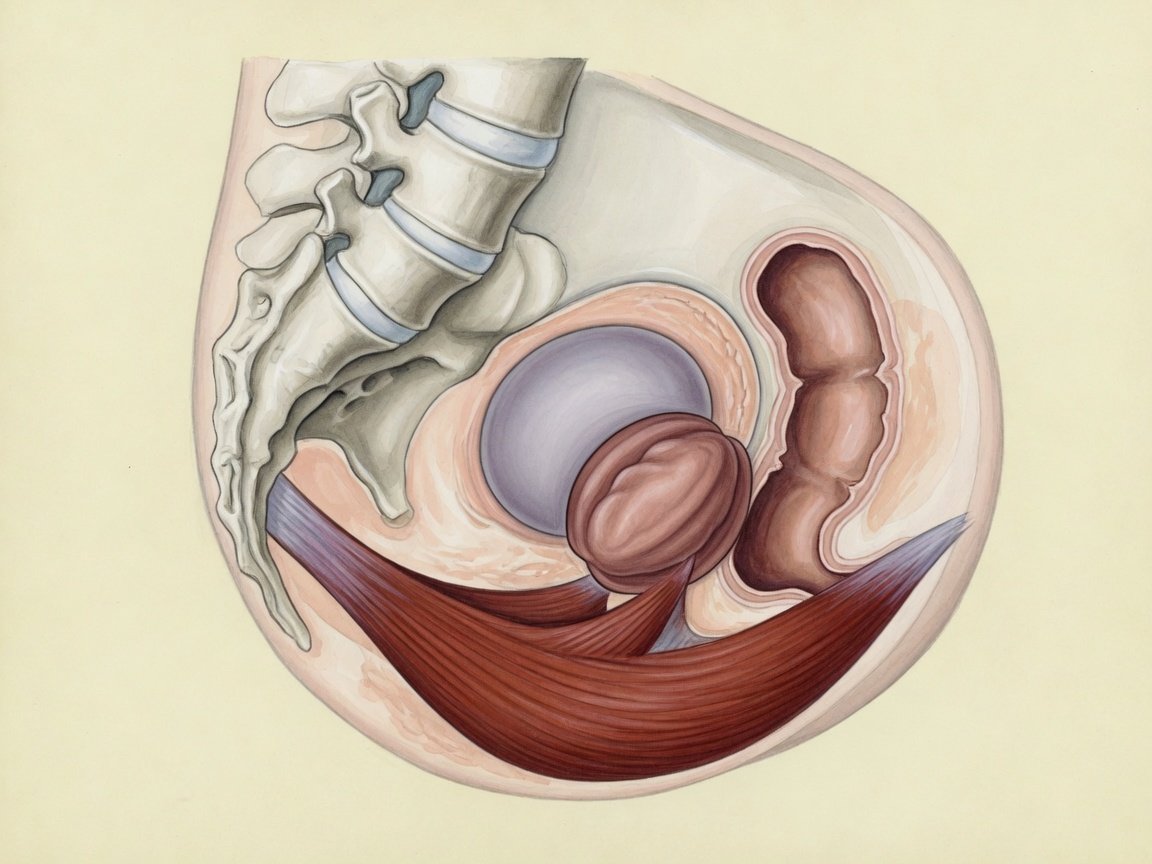
Kegel. Sling lifts.
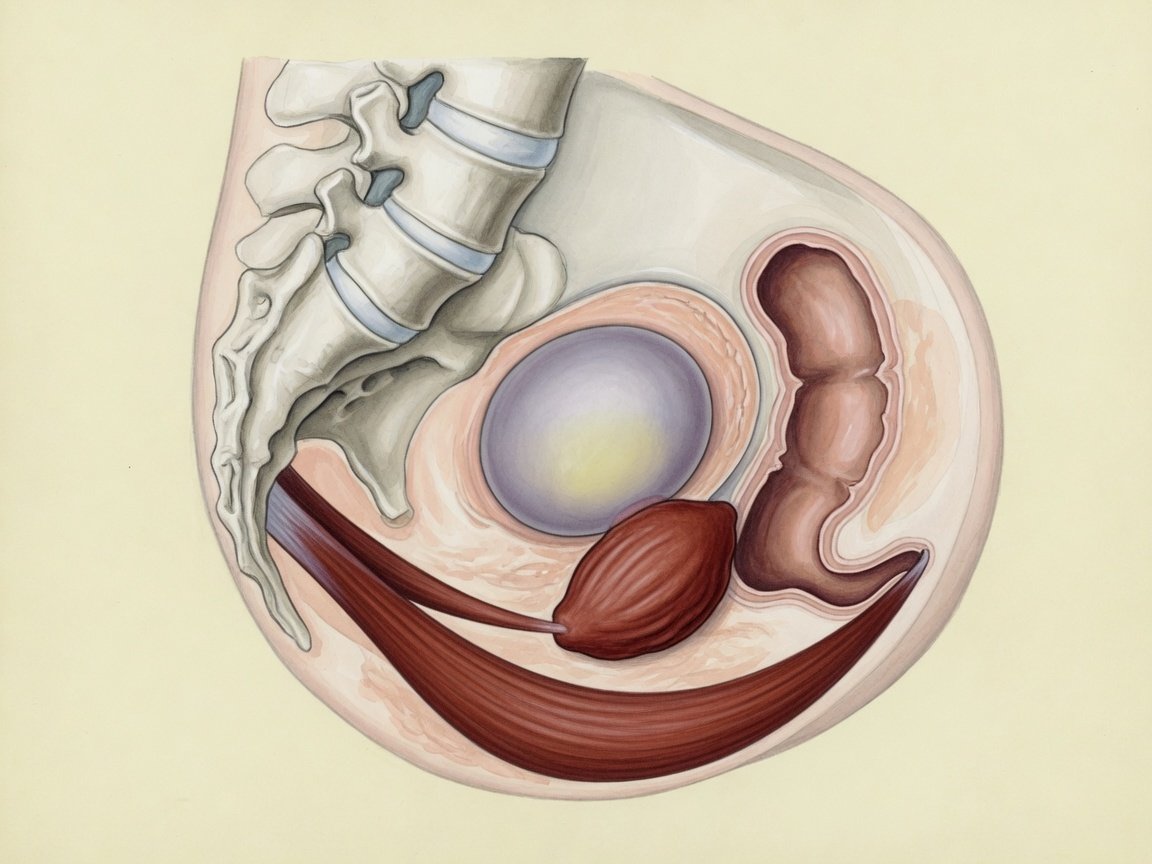
Reverse kegel. Sling drops.
Who reverse kegels are for
Men who mapped to the tight side of tight vs weak. Typical story: they did kegels for ED or to last longer, then noticed more ache, a tighter stream, or worse erections. Cleveland Clinic: kegels should not hurt; overdoing can increase tension; PT may include relaxation. Cleveland Clinic kegels for men.
Cleveland Clinic’s hypertonic pelvic floor article lists biofeedback and relaxation of the pelvis and abdominal wall as PT tools. Hypertonic pelvic floor.
ConsultQD (Cleveland Clinic urology): for pelvic floor spasm, PT is myofascial release, posture, and stretching; kegels applied as generic PT can make symptoms worse. Pelvic floor spasm.
Practice note (Justin): The first reverse kegel that worked for me was smaller than I expected. If you “try hard” you will bear down. The skill is allowing a drop on the inhale, not producing a new force.
How to do a reverse kegel
- Lie on your back, knees bent. Unclench jaw, belly, buttocks. One hand on the abdomen.
- Inhale through the nose. Let the belly rise. The pelvic floor is allowed to drop and widen — like a hammock letting down. This is the reverse kegel.
- Do not push as if passing stool. Do not hold the breath. Do not flare the ribs as a fake belly breath.
- Exhale quietly through the mouth. Stay unclenched. That rest is still part of the drill.
- Repeat 8–10 breaths. That is one session. Two or three sessions a day is enough to start.
NIDDK’s kegel instructions already require a full pelvic-floor relax after every squeeze. Reverse kegels train that relax as the main event. NIDDK.
You can later add a tiny kegel on the exhale if a PT wants both directions. Do not add that in week one if kegels were already aggravating.
Breathing is not optional
On a true diaphragmatic inhale, the diaphragm descends and the pelvic floor is mechanically encouraged to lengthen. That is why reverse kegels are paired with belly breathing rather than a held-breath push. If the belly does not move, you are not doing the drill. If the neck and shoulders jump, you are bracing the wrong floor.
Cleveland Clinic lists relaxation techniques for the pelvis and abdominal wall together. The abdomen and pelvic floor are a pressure system. A reverse kegel with a braced six-pack is a contradiction.
A conservative 2-week downtraining block
| When | What | Stop if |
|---|---|---|
| Days 1–7 | 2–3 sessions of 8–10 reverse-kegel breaths, lying only. No kegels. | Pain rises, you are bearing down, or you feel rectal heaviness that lingers |
| Days 8–14 | Same breaths sitting for one session if lying is easy. Still no max kegels. | Same stop rules |
| After pain is down and drop is clear | Re-screen tight vs weak. Add strengthening only if the pattern now looks weak/uncoordinated | Pain returns when you add lifts |
Evidence status: this calendar is a synthesis of clinic downtraining logic. There is no RCT of this exact reverse-kegel schedule in men. Needs research.
What the evidence can and cannot say
Can say: Nonrelaxing / hypertonic pelvic floor is a described clinical entity (Faubion et al., Mayo Clin Proc 2012, PMID 22305030). Pelvic floor spasm is common in CP/CPPS and is treated with relaxation-focused PT, not kegels (Cleveland Clinic). Pelvic floor PT for hypertonicity shows benefit in CP/CPPS cohorts in a 2022 systematic review (van Reijn-Baggen et al.). High-tone pelvic floor consensus: PFPT first-line, relaxation not strengthening, 8–12 weeks (PMC10953682).
Cannot say: Reverse kegels as a named home exercise have a male RCT with a dose, a cure rate, or a guaranteed IELT change. We will not invent one. Pastore’s PE trial was clinic rehab with biofeedback and stimulation, not reverse kegels. Kegels to last longer.
Faults that turn a reverse kegel into a strain
- Bearing down (Valsalva) — raises pressure, can worsen pain
- Holding the breath
- Flaring ribs instead of moving the belly
- Doing 20-minute “sessions” that become endurance clenches
- Using reverse kegels to avoid a PT when you have red-flag pain
Best for
- Pelvic pain, clenching, kegels-made-it-worse
- Urgency and hesitant start without clear weakness
- Arousal patterns where the floor never drops
Avoid if
- You are pushing as if constipated
- Frank leakage after prostatectomy with no pain — you likely need kegels first, with surgical clearance
- Catheter in, blood in urine, retention, fever
FAQs
What is a reverse kegel for men?
A reverse kegel is a controlled lengthening of the pelvic floor — a let-go and drop — usually timed with a diaphragmatic inhale. It is not a forceful push, Valsalva, or bowel-emptying strain.
Do reverse kegels help you last longer?
They may help men whose premature ejaculation is tied to a floor that never lets go. They are not a proven standalone PE cure and do not have Pastore’s clinic trial behind them. Weak, low-tone floors usually need strengthening and timing, not only release.
Can reverse kegels make a weak floor worse?
If you only bear down and never build any lift, a frankly weak floor will not get stronger. The bigger amateur error is still kegeling a tight floor.
Should I bear down like a bowel movement?
No. Bearing down is the most common reverse-kegel fault. Think “allow the base of the penis and anus to soften,” not “push a bowel movement.” Straining raises intra-abdominal pressure and can worsen pelvic pain.
How often should I do reverse kegels?
Short frequent practice: a few minutes, two or three times a day. There is no high-quality dose-finding RCT of named reverse kegels in men. Pain or heaviness means stop and get assessed.
Are reverse kegels the same as pelvic floor PT?
No. PT for a hypertonic floor often includes myofascial release, biofeedback, posture, and stretching. A reverse kegel is one home coordination drill. Cleveland Clinic treats PT as the mainstay for pelvic floor spasm.
When can I add regular kegels back in?
When you can find a full let-go, pain is down, and a clinician or PT says strengthening is appropriate. Do not add kegels to “finish the program” while pain is still climbing.
What to do next
If kegels are appropriate, use the 4-week starter protocol. If you have pain or squeezing already made things worse, start with tight vs weak instead.
Sources
- Cleveland Clinic. Kegel exercises for men. 2025. clevelandclinic.org
- Cleveland Clinic. Hypertonic pelvic floor. clevelandclinic.org
- Cleveland Clinic ConsultQD. How to diagnose and manage pelvic floor spasm. consultqd.clevelandclinic.org
- Faubion SS, Shuster LT, Bharucha AE. Recognition and management of nonrelaxing pelvic floor dysfunction. Mayo Clin Proc. 2012;87(2):187-193. PMID 22305030. Google Scholar
- NIDDK. Kegel exercises. niddk.nih.gov
- van Reijn-Baggen DA et al. Pelvic floor physical therapy for pelvic floor hypertonicity: a systematic review. Sex Med Rev. 2022. journal. Google Scholar
- High-tone pelvic floor dysfunction treatment algorithm. PMC10953682